As an Amazon Associate this site earns from qualifying purchases.
Quick Picks
| Label stock | Size and count as listed | Best suited to | Link |
|---|---|---|---|
| 4" X 6" Direct Thermal Labels (2500 Count, 10 Rolls) - Printable Postage | 4 x 6 inches, listed at 2500 labels across 10 rolls | Shipping and postage labels scanned within days | Check Price on Amazon |
| 2.25" X 1.25" Direct Thermal Labels (10000 Count, 10 Rolls) | 2.25 x 1.25 inches, listed at 10000 labels across 10 rolls | High-volume barcode, inventory and price labeling | Check Price on Amazon |
| Aquos Torrey TR-8010 Printing Scale Labels | 58mm x 40mm, listed at 700 labels per roll, 12 rolls | Torrey LSQ-40L scale users needing UPC-standard blanks | Check Price on Amazon |
Disclosure: We earn a small commission from qualifying Amazon purchases at no extra cost to you.
As an Amazon Associate we earn from qualifying purchases. This page contains affiliate links, and we may receive a commission if you buy through them — at no extra cost to you.
As an Amazon Associate, we earn from qualifying purchases.
Last Updated: September 2026
Direct thermal printing is a method that uses heat, and only heat, to create an image. The printhead presses against a label coated with heat-sensitive chemicals, selectively heats tiny dots along a line, and those dots turn black. No ink, no toner, no ribbon. That is also the answer to the second question everyone asks: no, direct thermal printers do not need ink.
The catch is baked into the same chemistry. A label that darkens when you heat it will keep darkening whenever anything else heats it. That is why thermal labels fade, gray out, or go completely black in a hot car.
This guide explains the mechanism, tells you when direct thermal is the right call, and points to the label stock that matches specific jobs. Full disclosure up front: this website does not do product research. Everything below is reasoning from published listing data and from how the technology works.
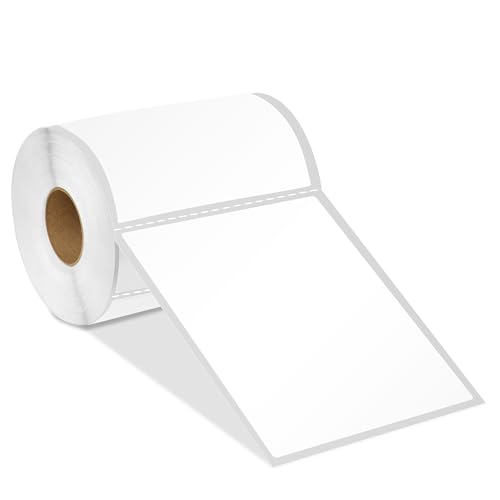
- Specifications: 4X6 labels, 10 rolls with 250 labels per roll, 2,500 total on a 1-inch core. Matte white thermal label paper with perforations between each label for easy tear
- Shipping and Returns: Use 4X6 thermal labels for outbound orders, return shipments, and relabeling reused boxes. Provides full-size coverage for carrier requirements on cartons
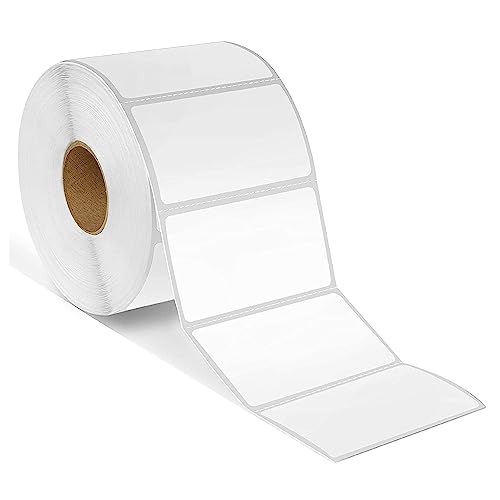
- Specifications: 2 1/4 X 1 1/4 inch direct thermal sticker labels, 10 rolls with 1,000 stickers per roll, 10,000 total on a 1-inch core. Matte white thermal label paper with
- Versatile Labeling: 2.25 X 1.25 thermal labels ideal for inventory UPC barcode labels, SKU and FNSKU labels, small package shipping label stickers, shelf and bin organization
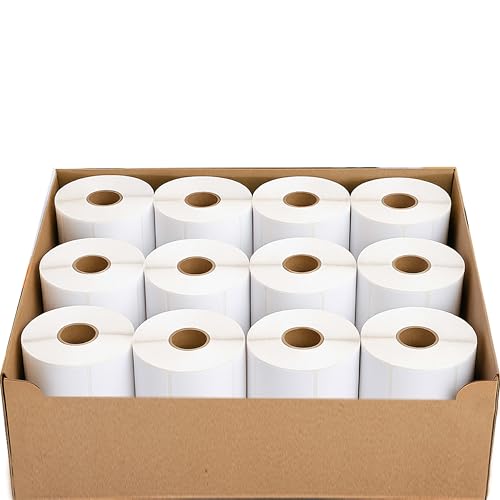
- Perfect Fit For Torrey Lsq-40l Scales: Designed specifically for Torrey printing scales, these printing scale labels ensure smooth feeding, accurate printing, and reliable
- Premium Direct Thermal Paper – No Ink Required: High-quality direct thermal label rolls deliver crisp, smudge-free UPC codes, pricing, and product details without ink or toner
The Problem: Your Labels Went Blank
Here's the thing about a direct thermal label. The paper itself carries the image-forming chemistry: a leuco dye and a developer sitting in a coating on the face stock. Apply heat past a threshold and the two react, and the dot goes dark.
Nothing about that reaction is one-way in a useful sense. Heat the whole sheet and the whole sheet darkens. Expose it to certain solvents, oils, or plasticizers and the coating can be attacked, wiping the image out in patches.
So the failure modes are predictable:
- Heat. A dashboard, a warehouse near a heater, a shrink tunnel, a hot delivery van. Uniform blackening.
- Light. Prolonged UV exposure degrades the printed image and can gray the background.
- Friction. Rubbing generates local heat. Drag a stack of labels across a counter and you can get smears.
- Contact with plastics and solvents. Vinyl sleeves, adhesives, hand sanitizer, cleaning sprays. The dye system is chemically vulnerable.
- Time. Even in a drawer, coatings age. Thermal label paper shelf life is finite, and manufacturers of these particular rolls do not publish a shelf-life figure on the listings cited here.
Direct Thermal vs Thermal Transfer Labels
Thermal transfer is the other half of the family. Same style of printhead, same dot-line heating, but the heat is applied to a ribbon instead of the label. Melted resin or wax transfers from ribbon to label stock, and the image is a deposited pigment rather than a chemical reaction in the paper.
| Direct thermal | Thermal transfer | |
|---|---|---|
| Consumables | Label stock only | Label stock plus ribbon |
| Image | Chemical reaction in the coating | Wax or resin transferred onto the label |
| Heat sensitivity after printing | High | Low |
| Typical use | Shipping, receipts, scale labels, short-life barcodes | Asset tags, chemical drums, outdoor and archival labels |
| Cost per label | Lower, no ribbon to buy | Higher, ribbon is a recurring cost |
The decision rule is short. If the label needs to survive longer than the shipment or the shift, use thermal transfer. If it gets scanned and thrown away, direct thermal is cheaper and simpler, and there is one fewer part to run out mid-job.
Step-by-Step: Choosing and Running Direct Thermal Correctly
- Confirm your printer is direct thermal. If it has a ribbon spindle you did not know about, you may be running a thermal transfer machine with the ribbon missing, which prints nothing at all.
- Match the label to the printer's width and the machine's gap or black-mark sensing. A scale printer and a shipping printer are not interchangeable in this respect.
- Check the roll's core and outer diameter against what the printer accepts. A 10-roll shipping pack and a 12-roll scale pack are wound to different geometries.
- Print one label before you commit the roll. Confirm darkness and that barcodes scan on the first pass.
- Store the unused stock cool, dark, and away from PVC and solvents. Original packaging is the right container.
- Apply, scan, and let it go. Do not plan on reading that label in eighteen months.
Recommended Products
Three label stocks, three genuinely different jobs. Note what the evidence here is: the Amazon Creators API verified product record for each ASIN, retrieved 2026-09-05. That record supplies the product title and the counts, sizes, and roll structure stated in it. It does not supply prices, ratings, adhesive specifications, coating grades, or shelf-life figures, so this page does not state any of those.
4" X 6" Direct Thermal Labels (2500 Count, 10 Rolls) - Printable Postage — Best for shipping labels that get scanned and discarded
This is the format the entire parcel industry standardized on. The listing states 4 x 6 inches, 2500 labels across 10 rolls, which works out to 250 labels per roll, and it identifies the intended use as printable postage.
That 250-per-roll arithmetic matters more than it sounds. A seller shipping 30 orders a day would burn through a roll roughly every eight or nine days at that count, so a 10-roll pack is a quarter's worth of media for a small operation rather than a lifetime supply.
Direct thermal is the right chemistry for postage specifically because the label's working life is measured in days. It is scanned at pickup, at sorting, and at delivery, then it goes in the recycling with the box.
Pros
- Standard 4 x 6 postage size fits the common desktop shipping printers
- No ribbon to buy, replace, or run out of mid-batch
- 2500 labels across 10 rolls means you are not reloading constantly
- 250 labels per roll is a modest run length for a high-volume shipper who would rather reload less often
- The listing does not state adhesive type, liner weight, or whether the stock carries a protective topcoat, so suitability for freezer or outdoor exposure is unknown from this evidence
- Wrong choice entirely for anything that needs to stay legible past the delivery scan
2.25" X 1.25" Direct Thermal Labels (10000 Count, 10 Rolls) — Best for high-volume barcode and inventory runs
Different problem, different math. The listing states 2.25 x 1.25 inches with 10000 labels across 10 rolls, which is 1000 labels per roll.
Compare that directly to the 4 x 6 pack above, also 10 rolls but 2500 labels total. Four times the label count in the same number of rolls, because each label is a fraction of the area. If your job is tagging bins, shelves, or small products by the thousand, that is the difference between reloading weekly and reloading quarterly.
The small footprint is the constraint too. At 2.25 x 1.25 inches there is room for a barcode and a short line of text, not a shipping address block.
Pros
- 1000 labels per roll is four times the per-roll count of the 4 x 6 pack, so far fewer media changes
- Common small-format size for barcode, price, and bin labeling
- No ribbon cost across all 10000 labels
- Too small for address or postage use, so it does not double as shipping stock
- The listing does not publish core size, roll diameter, or sensing type, so printer fit needs checking against your machine's spec
- Inventory tags often live on a shelf for months, which is exactly where direct thermal chemistry is weakest
Aquos Torrey TR-8010 Printing Scale Labels — Best for Torrey LSQ-40L scale owners who need UPC-standard blanks
This one is a compatibility purchase, not a general-purpose one. The listing names the Torrey LSQ-40L scale explicitly, specifies 58mm x 40mm, describes the labels as UPC standard blank scale labels, and states 700 labels per roll across 12 rolls. It also states Made in USA.
Run the numbers: 700 per roll times 12 rolls is 8400 labels. For a deli or butcher counter weighing and labeling packages one at a time, that is a substantial standing supply, and the per-roll count of 700 means a counter doing a couple hundred packages a day reloads roughly every three days.
Direct thermal makes obvious sense here. Scale labels are printed at the counter, priced by weight, and consumed within the product's short shelf life.
Pros
- Explicitly listed for the Torrey LSQ-40L, removing the fit guesswork that dogs generic scale media
- 58mm x 40mm at UPC standard means the barcode field is sized for retail scanning
- 12 rolls at 700 labels each is 8400 labels, a genuine bulk buy
- Narrowly scoped to Torrey scale users, so there is no reason to buy it for a desktop shipping printer
- 58mm x 40mm is a small canvas for anything beyond weight, price, and a barcode
- The listing does not publish print darkness recommendations, adhesive class, or a shelf-life rating for the stock
Tips for Best Results
- Store unopened rolls in original packaging, away from heat, sunlight, and PVC.
- Keep printhead darkness only as high as the barcode needs. Excess heat shortens printhead life and can bleed fine bars.
- Clean the printhead regularly. Adhesive residue and paper dust cause the thin white streaks that break barcode scans.
- Buy the roll count that matches your reload tolerance, not just the lowest unit cost.
- If a label has to outlive the shipment, do not solve it with darker printing. Switch to thermal transfer.
Common Mistakes to Avoid
- Buying direct thermal for archival labeling. Asset tags, file boxes, and equipment IDs need thermal transfer.
- Assuming any 4 x 6 roll fits any printer. Core diameter, winding direction, and gap sensing vary and are not always published.
- Filing thermal receipts and labels with plastic sleeves. Plasticizers can attack the coating.
- Treating price-per-label as the only metric. The 2.25 x 1.25 pack lists 10000 labels to the 4 x 6 pack's 2500, but they are not substitutes for each other.
- Blaming the printer when the image fades. The paper is the image. Fading is a media and storage issue.
How We Research
The factual basis for this page is narrow and worth stating plainly. For each of the three label stocks named above, we pulled the Amazon Creators API verified product record, retrieved 2026-09-05, and read the product title fields closely for size, count, roll structure, stated compatibility, and country of manufacture.
We then did arithmetic on those figures and reasoned about what they mean for a buyer, which is where the per-roll counts and reload intervals come from. Where a record is silent, this page says so rather than filling the gap. Nothing here involves physical handling, printing, or measurement.
Final Verdict
Direct thermal is the correct default for anything disposable. Shipping labels, scale labels, receipts, short-life barcodes. You save the ribbon cost and the ribbon changeover, and the fade you get in return does not matter for a label that dies with the box.
If you are shipping parcels, the 4" X 6" Direct Thermal Labels (2500 Count, 10 Rolls) - Printable Postage is the straightforward pick because the listing names 4 x 6 printable postage as its purpose, which is the size the carriers expect. If you are tagging inventory by the thousand, the 2.25" X 1.25" Direct Thermal Labels (10000 Count, 10 Rolls) gives you 1000 labels per roll against the shipping pack's 250, and that per-roll count is the whole argument. If you run a Torrey LSQ-40L, the Aquos Torrey TR-8010 Printing Scale Labels is listed for that exact scale at 58mm x 40mm, and compatibility beats every other consideration in scale media.
What none of these solve is permanence. For that, budget for a thermal transfer printer and resin ribbons, and stop trying to make heat-sensitive paper behave like something it is not.
Frequently Asked Questions
Sources & Methodology
This website did not print, handle, age, or lab-test any of the label stocks discussed here, and it runs no testing facility. What informs this page is the Amazon Creators API verified product record for ASINs B08GMBDN6N, B0CHNB48FY, and B07QY487BC, retrieved 2026-09-05, read for stated dimensions, label counts, roll counts, and declared printer compatibility, plus arithmetic and technical reasoning applied to those published figures.
For label media specifically, that is a reasonable evidence base for the decisions that actually matter: does this size fit my printer, how many labels am I getting per roll, and how often will I reload. It is not sufficient for judging adhesive performance, coating durability, or shelf life, and where those records are silent, this page has left the question open rather than guessed at an answer.